The Working Principle of the Leveling Machine
2023/03/25
In sheet metal processing, traditional leveling methods—such as using hammers, flame heating, or plate rolling machines—are no longer economically viable processes. Even slightly more advanced leveling presses fail to effectively reduce residual stress within the material. These internal stresses are subsequently released during operations such as stamping, laser cutting, or flame cutting, causing the sheet metal parts to bend and deform. This compromises the accuracy of subsequent processes, leading to time-consuming rework, production delays, and ultimately, increased manufacturing costs. This is, undoubtedly, a challenge that many enterprises wish to avoid.
Amidst the rapid advancement of industrial automation, the highly automated processing of sheet metal parts relies intrinsically on precise leveling techniques. Consequently, an increasing number of sheet metal processing enterprises are now utilizing roller-leveling machines to ensure both the precision and efficiency of their operations.
So, what exactly is the working principle behind roller-leveling machines?
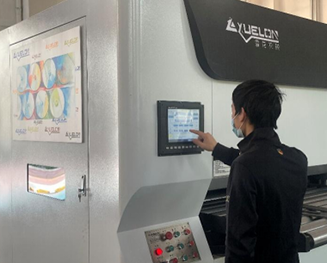
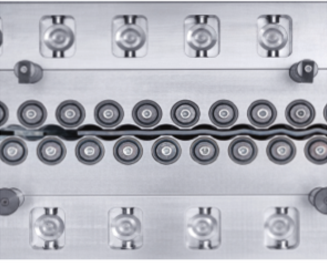
In fact, the principle behind roller leveling is both remarkably simple and ingenious: the leveling rollers are arranged in a staggered configuration, subjecting the sheet metal to multiple, continuous, and alternating bending cycles as it passes through the machine. The magnitude of this bending diminishes progressively—a process closely resembling a decaying sine wave. Under the influence of this specific roller arrangement, the leveled sheet metal achieves an exceptional degree of flatness, with virtually all internal stresses effectively eliminated. Consequently, the aforementioned troublesome issues are entirely avoided during subsequent processing stages.
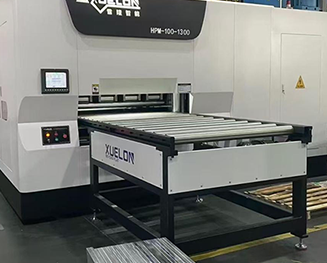
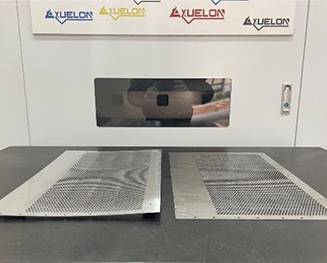
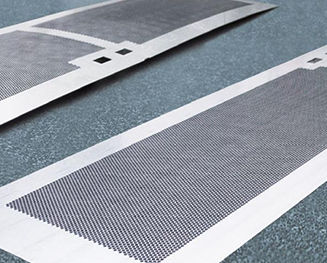

A crucial point to note is that the number of leveling rollers depends on the material thickness. This is because the greater the number of alternating bending cycles performed within the roller leveler—and the smaller the diameter of the leveling rollers—the lower the residual stress remaining in the processed sheet material, resulting in a superior leveling effect. When selecting a roller leveler, it is essential to ensure that the leveling rollers are adequately supported to prevent deflection and buckling. Furthermore, the leveling equipment must incorporate safety features designed to prevent operational errors; it should also be easy to clean and maintain, thereby minimizing downtime that could disrupt daily production and, in turn, enhancing overall machine utilization.
If you would like to learn more—such as operating instructions for leveling machines, or details regarding parts levelers, precision levelers, and hydraulic levelers—please leave an offline message with your contact information, and we will get in touch with you as soon as possible.